Part 1 of four
Why the Ground Costs What It Costs
Every quote anybody gives you has this underneath it, and nobody itemizes it. It is the least interesting part of the price and the one that explains the most.
The four questions
| What this part buys | A rectangle of made ground, drained, surfaced and marked, that nobody else may use while your car is on it. |
|---|---|
| What makes it move | Distance from the field, first and by a long way. Then whether the parcel could be doing something more profitable, which near a growing field it usually could. |
| What to ask when you call | How far out the lot actually is, in miles rather than in minutes. Minutes are a claim about traffic; miles are a fact. |
| What cannot be promised about it | That the figure will hold. Land near a working field is the part of this business most likely to be sold out from under a lot, and this desk finds out when everybody else does. |
Why distance and not size
A parking space is roughly nine feet by eighteen wherever you go. The rectangle does not change, so the difference between one lot and another is almost entirely what the ground under the rectangle is worth.
Around Pittsburgh's field that value falls off fast, because the land west of the city is not scarce in the way land near a coastal field is. Two miles out and two hundred feet of frontage on a state route is a different proposition from the same two hundred feet at the terminal end.
So the first number worth asking for is miles. Everything else on a quote sits on top of it.
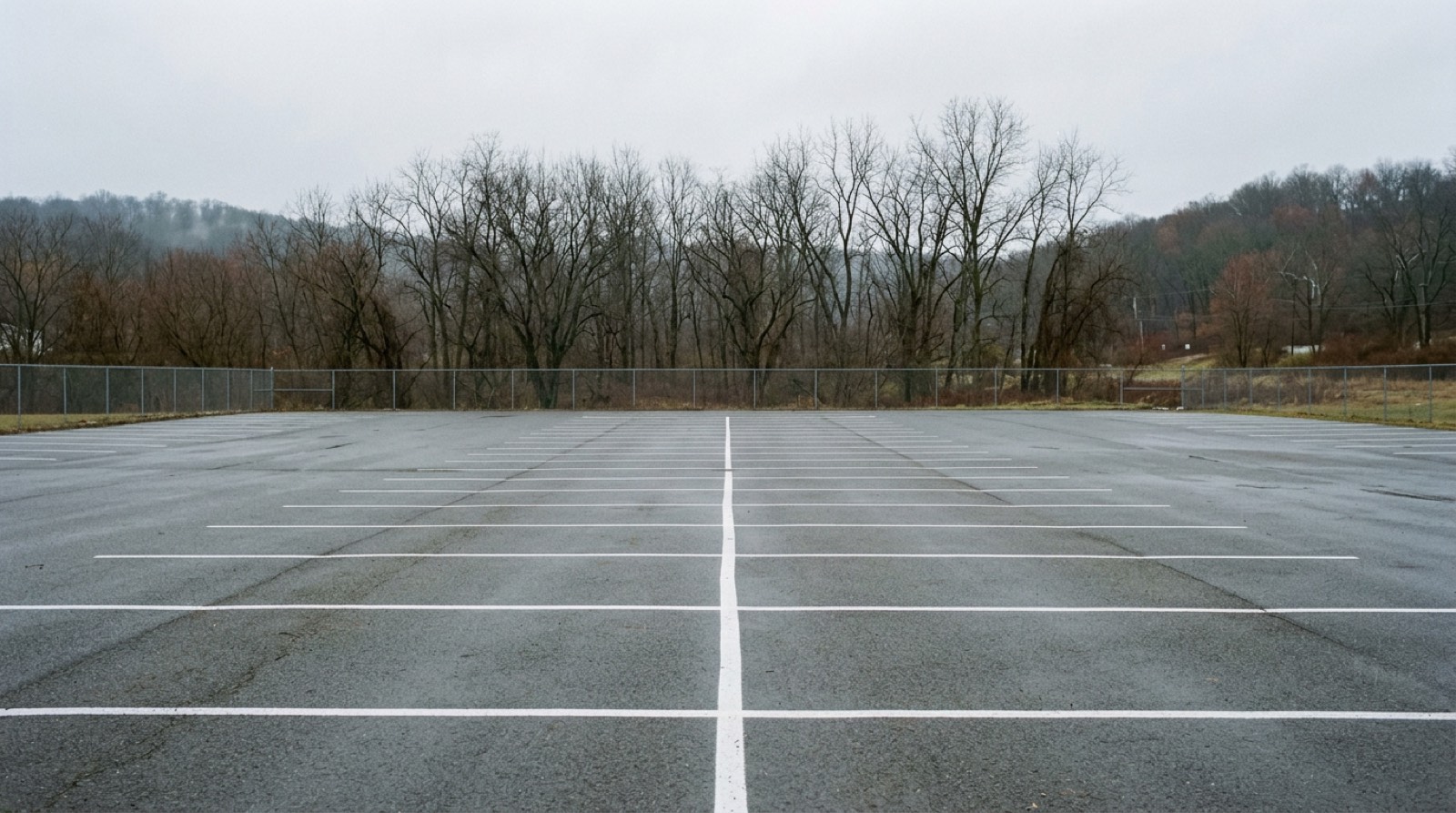
Minutes are not a unit
A lot that describes itself as eight minutes out has told you about traffic on the day somebody with a stopwatch drove it.
Miles do not do that. Ask for miles, then decide for yourself what those miles cost you at six in the morning against four in the afternoon, because those are different journeys on the same route.
This desk asks operators for the distance and passes it on. Where an operator gives only a time, the quote says so, and that is itself worth knowing about the operator.
What a fenced lot is and is not
A fence keeps the ground defined. It does not keep anything else.
Read a fence as a boundary rather than as a promise. What actually happens on the ground is the person who moves it or watches it, which is a different part of the price entirely and is where the useful questions live.
Practical
- Ask for miles. Write the number down.
- Ask what the surface is. Asphalt drains, gravel does not, and gravel in a February thaw is a different experience.
- Ask whether the lot is lit, and take the answer as a fact about the ground rather than as a claim about safety.